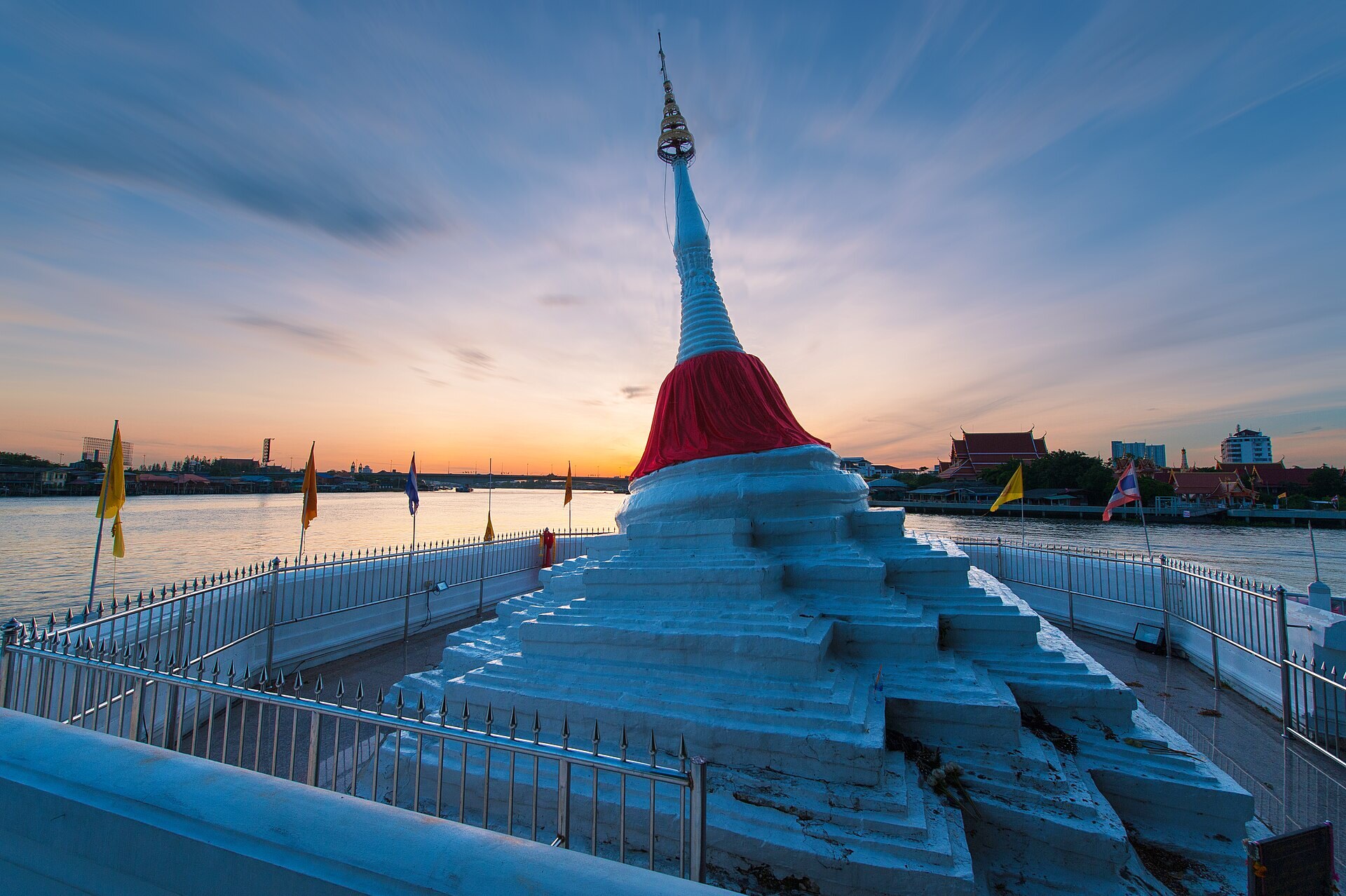
Bangkok's Songkran is a citywide water fight, pickup trucks with barrels, Khao San Road turned into a drenched carnival. Koh Kret, forty minutes upriver by boat and road, keeps a version closer to the festival's older meaning: a Mon New Year built around merit-making, bathing Buddha images, and food that only makes sense in hot season. The water play exists here too, mostly along the bike loop and near the pier, but it is a side note rather than the main event. The main event is quieter and happens mostly inside temple grounds and family homes.
What Songkran means to the Mon community here
The Mon of Koh Kret call it a New Year festival, and the religious core predates the water fights associated with the rest of Thailand. Families visit the island's leaning Mon temple to pour scented water over Buddha statues, a gesture of cleansing meant for the year ahead rather than for soaking strangers. Elders receive water poured gently over their hands, a sign of respect that looks almost nothing like the street battles downtown. Expect to see monks receiving alms early, around 7:00 to 8:00, before the day's heat sets in.
Khao chae and the Songkran food table
Khao chae, chilled rice served in scented water with small savory side dishes, is traditionally a hot-season dish and shows up on Koh Kret around Songkran more than at any other time of year. It is labor-intensive: the rice is perfumed with jasmine-scented water, sometimes smoked, and the side dishes (stuffed shallots, sweet shredded pork, stuffed chilies) take hours of separate preparation. If you want to understand why this dish matters here rather than treating it as a curiosity, read the longer piece on Mon dishes including khao chae before you visit. During the festival window, some households and temple stalls prepare it in larger batches, but availability depends on the year and the organizers, so check the day's schedule rather than assuming it is guaranteed.
Songkran dates shift slightly by local calendar additions. The core days are usually April 13 to 15, but Koh Kret's temple-based activities may run a day or two around that window. Confirm the current year's schedule locally rather than fixing a date months ahead.
Water, but not everywhere
Some splashing does happen, mostly among younger residents and near the main pier and market lanes, using buckets and small water guns rather than the truck-mounted cannons seen in central Bangkok. It tends to pick up in the afternoon, roughly after 13:00, and stays fairly contained to a few hundred meters of the walking paths. If you are cycling the seven-kilometre loop around the island during Songkran, expect occasional good-natured splashes near the busier sections, and carry a dry bag for your phone. Away from the market core, the rest of the loop stays as quiet as any other weekend.
Getting there during the festival crowd
Songkran weekends pull larger crowds than an ordinary Saturday, partly locals returning for the holiday and partly visitors curious about the Mon version of the festival. The cross-river ferry from Wat Sanam Neua takes about 5 minutes and runs continuously, but queues lengthen at midday. If you are coming from central Bangkok, the approach described in the guide to reaching Koh Kret by Grab, bus or express boat still applies, though you should budget extra time for traffic around the Nonthaburi side during the holiday period. Arriving before 9:00 avoids both the heat and the thickest crowds at the pier.
Where to base yourself for the festival
Staying overnight near the island makes the early temple hours realistic without a predawn commute from central Bangkok. The practical options sit on the Nonthaburi side or along the nearby riverside stretch of Bangkok, and the tradeoffs between the two are covered in the guide on where to stay for Koh Kret. During Songkran specifically, book earlier than usual: the holiday pulls domestic travelers to riverside areas generally, and rooms near the pier can fill a week or two ahead.
What to skip if you only have one day
If Songkran falls on a weekday and you can only visit once, prioritize the morning temple activities and the khao chae stalls over the afternoon water play, which is replicable on almost any other day in Bangkok. The pottery workshops described in the piece on Mon pottery from wheel to kiln often continue on a reduced schedule during the holiday, since some potters take the days off for family observances, so do not plan a workshop visit around this weekend without confirming ahead. A standard day-trip itinerary, outlined in the general guide to the Koh Kret day trip, still works as a skeleton, you just compress it into the cooler morning hours and treat the afternoon as optional.
Songkran on Koh Kret rewards patience over spectacle. There is no single hour when "the festival happens": it is a loose sequence of merit-making, food preparation, and modest water rites spread across a long, hot day, closer in spirit to a family new year than a tourist event. Come for the quieter version of Songkran, not the wetter one, and you will leave with a better sense of why the Mon here still call this their new year.